


Please Leave Us A Message
Privacy statement: Your privacy is very important to Us. Our company promises not to disclose your personal information to any external company with out your explicit permission.
Use it as a checklist when briefing suppliers: the faster you can state your industry-specific requirements, the faster a manufacturer can quote accurately — and the fewer surprises arrive with the shipment.
Specify by the medium and the regulatory environment of your industry — not by volume and price alone. The four most common buyer profiles look like this:
Chemical and petrochemical plants. Media corrosivity drives everything. Non-corrosive solvents and oils run fine in coated carbon steel with 1–3 mm corrosion allowance; chlorides, acids, and liquid ammonia push you to 304/316 stainless or lined construction. Weld quality is critical because chemical attack concentrates at seams, and 100% pressure testing should be non-negotiable. For aggressive media like liquid ammonia, dedicated corrosion-resistant vessels with stress-cracking controls are essential — this is exactly where Durable Pressure Vessels earn their price premium.
Food, beverage and pharmaceutical plants. Hygiene rules disqualify bare carbon steel entirely. You need stainless steel with smooth, cleanable welds, sanitary fittings, and surfaces that survive repeated CIP (clean-in-place) cycles. Here High-Quality Tanks are defined by finish and documentation: polish specs, material certificates, and weld records matter as much as capacity. stainless steel oil Storage Tanks, for example, are built for edible oil, lubricant, and food-plant service with corrosion-resistant internals and food-compatible construction.
Water treatment and municipal facilities. The enemies are scaling, internal corrosion from fluctuating water chemistry, and vacuum conditions during degassing. Tanks and vessels here need anti-corrosion internal treatment, vacuum-rated designs where deaeration is involved, and stable pressure-buffering performance for distribution systems. Corrosion allowance plus scheduled drainage and inspection keeps these assets running past 20 years.
Energy and general manufacturing. Compressed air receivers, fuel and lubricant storage, and buffer tanks dominate. These are the most forgiving applications — coated carbon steel with disciplined condensate drainage delivers decades of service at the lowest cost per liter. The main specification points are pressure rating, drain design, and saddle support layout for horizontal installations.
✅ Bottom line: Chemical service is decided by corrosion resistance, food service by hygiene and finish, water treatment by scale and vacuum handling, and energy storage by pressure rating — match the spec sheet to your industry before comparing prices.
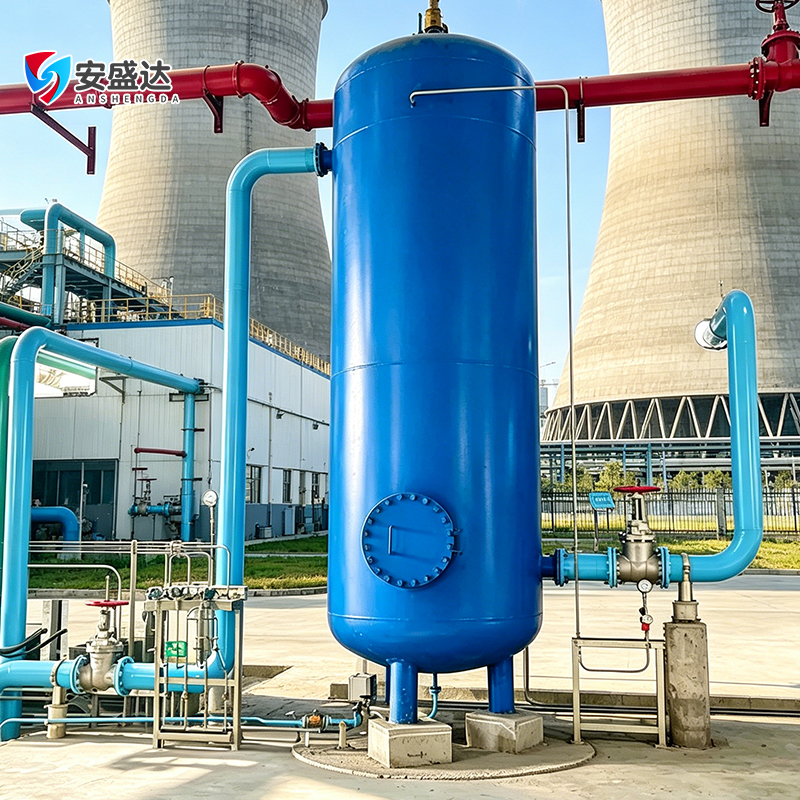
A precise RFQ gets accurate quotes — a vague one gets a cheap generic tank that misses your industry's requirements. Include these items when requesting quotations from any manufacturer:
Manufacturers with real engineering depth will respond to this RFQ with design calculations, not just a price. Jiangsu Anshengda Pressure Vessel Co., Ltd. — an OEM/ODM pressure vessel factory with 11,000 m² of production facilities and its own flaw detection room — quotes against your medium and working conditions, adjusts material and lining to your chemical environment, and supplies factory test records with every shipment. Whether you need a single Storage Tank or a batch of customized vessels for a project, this specification-first workflow prevents the classic failure of receiving a tank that is technically "correct" but wrong for your industry.
For overseas buyers, one more practical tip: ask the supplier how they handle export packing and installation guidance. Factories that ship worldwide regularly — serves chemical, food, energy, and water-treatment clients across export markets — will already know the documentation and support your site team needs.
✅ Bottom line: Put medium, pressure, orientation, finishes, and testing requirements in every RFQ — suppliers who answer with engineering calculations are the ones who will build for your industry, not just their catalog.

Q: Which tank material should a food processing plant choose? A: 304 stainless steel as the baseline, with sanitary weld finishes and cleanable internals; upgrade to 316 where chlorides or aggressive cleaning chemicals are present. Bare carbon steel is not acceptable for food-contact storage.
Q: Can one manufacturer supply tanks for different industries? A: Yes, if they hold a multi-grade license and both carbon and stainless capability.Jiangsu Anshengda Pressure Vessel Co., Ltd. manufactures durable pressure vessels for corrosive chemical service, sanitary stainless tanks, vacuum deaerators, and air receivers under the same Class D license, with OEM/ODM customization for each industry's requirements.
Q: Are horizontal or vertical tanks better for industrial storage? A: Vertical saves floor space and suits tall facilities; horizontal tanks with saddle supports are easier to install, transport, and maintain, and are common for oil, fuel, and buffer applications. Choose by site layout, not by rule of thumb.
Send your industry, stored medium, and working conditions, and our engineering team will return a material recommendation, industry-specific finish/certificate plan, and factory-direct OEM quotation — free of charge. From chemical plants to food factories to water treatment facilities, we build Reliable Tanks matched to your process. Contact our China factory today.

Email to this supplier
Privacy statement: Your privacy is very important to Us. Our company promises not to disclose your personal information to any external company with out your explicit permission.
Fill in more information so that we can get in touch with you faster
Privacy statement: Your privacy is very important to Us. Our company promises not to disclose your personal information to any external company with out your explicit permission.